
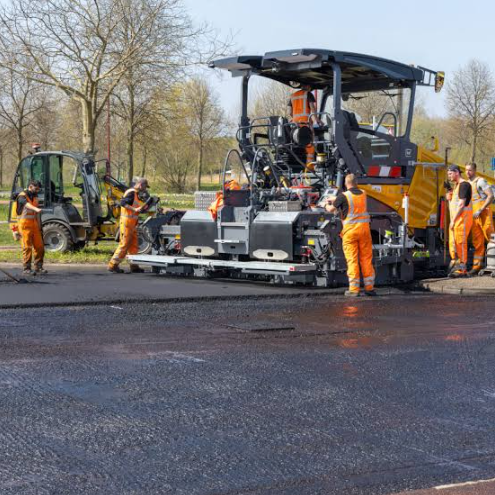
Asphalt paving is an important investment for property owners who need durable, reliable surfaces for vehicle access and everyday use. However, the requirements of a commercial parking lot, warehouse access road, or business entrance can differ significantly from those of a typical residential driveway. Commercial properties often accommodate more vehicles, heavier traffic, frequent deliveries, and larger paved areas, making proper planning and professional installation especially important.
Understanding the difference between residential and commercial paving helps businesses identify the services they need and evaluate contractors more effectively. Experienced asphalt companies in Utah may offer a range of services, including new asphalt installation, parking lot paving, pothole repairs, resurfacing, crack sealing, and pavement maintenance. The appropriate service depends on the property’s condition, intended use, traffic volume, and long-term maintenance goals.
Top Job Asphalt is one brand commercial property owners can consider when researching asphalt paving and maintenance options. By understanding the services associated with commercial projects, business owners and property managers can make more informed decisions about maintaining their paved surfaces.
Understanding Residential and Commercial Asphalt Projects
Residential and commercial paving projects share some basic construction principles, including site preparation, grading, base construction, asphalt placement, and compaction. However, their intended uses can create different design and maintenance requirements.
Residential projects generally involve driveways or smaller private paved areas used primarily by passenger vehicles. Commercial projects may include large parking lots, office complexes, retail centers, industrial facilities, loading zones, and private access roads.
These commercial surfaces often experience more frequent traffic and may need to accommodate delivery trucks, service vehicles, buses, or other heavy vehicles. Businesses must also consider traffic circulation, parking arrangements, pedestrian access, drainage, and the need to maintain operations during construction.
For this reason, commercial paving should be planned around the property’s specific demands rather than treated as a larger version of a residential driveway.
When comparing contractors, businesses should explain how the property is used and what vehicles regularly travel across it. This information helps the contractor assess the site and recommend appropriate materials, preparation methods, and maintenance services.
Commercial Parking Lot Installation
Parking lot construction is one of the most important services for businesses that welcome customers, employees, tenants, or visitors. A well-planned parking lot provides organized vehicle access and supports the daily operation of a commercial property.
The installation process begins with an assessment of the site. Contractors consider the size of the proposed parking area, existing ground conditions, expected traffic, drainage, and the layout of entrances and exits. The site may require clearing, grading, excavation, or preparation of a suitable base before asphalt installation.
Commercial parking lots must also support efficient movement. The layout should account for parking spaces, traffic lanes, turning areas, pedestrian routes, and accessible parking requirements. Pavement markings and directional signs may be necessary to help drivers navigate the property.
The pavement structure should reflect the traffic expected on the site. A small office parking area used mainly by passenger vehicles may have different requirements from a shopping center with frequent delivery vehicles or an industrial property accommodating heavier traffic.
Experienced asphalt companies in Utah can evaluate these factors and help businesses plan a parking lot suited to their operational needs. Property owners should request a detailed proposal explaining preparation, paving, drainage, markings, and any other included services.
Commercial Access Roads and Driveways
Commercial driveways and private access roads connect business facilities with public roads, parking areas, loading zones, and service entrances. These surfaces are important for employees, customers, suppliers, and delivery vehicles.
Unlike many residential driveways, commercial access routes may experience repeated traffic throughout the day. Some also accommodate vehicles with substantial loads, which can place additional stress on the pavement.
A contractor should assess the intended traffic and condition of the site before recommending a pavement design. Preparation may involve grading, base construction, drainage planning, and selecting an appropriate asphalt structure.
Businesses should pay particular attention to entrance points and turning areas. Vehicles may brake, accelerate, or turn repeatedly in these locations, increasing the stress placed on the pavement. If heavy vehicles use the route, the design should account for those loads.
Maintaining access roads is also important. Cracks, potholes, and uneven surfaces can interfere with vehicle movement and create unnecessary difficulties for business operations.
Regular inspections and timely repairs help property managers identify deterioration before it spreads. Depending on the condition of the pavement, maintenance may involve localized patching, crack sealing, resurfacing, or more extensive reconstruction.
Asphalt Repair and Pothole Patching
Both residential and commercial asphalt surfaces can develop cracks and potholes, but damage to commercial pavement can affect a larger number of users and disrupt business activities.
Potholes may form when water enters damaged pavement, weakens the supporting materials, and combines with repeated vehicle traffic to break apart the surface. Cracks can develop as asphalt ages, experiences temperature changes, or responds to movement in the underlying structure.
Commercial parking lots should be inspected regularly, especially around entrances, loading areas, delivery routes, and other locations exposed to heavy traffic. Early identification can help businesses prioritize repairs before the damage becomes more extensive.
Repair methods depend on the type and severity of the problem. Crack sealing may be suitable for certain cracks, while localized patching can address isolated potholes and damaged pavement. More extensive deterioration may require removal and replacement of larger sections.
A contractor should evaluate the cause of the damage before recommending a repair. Filling a pothole without addressing a failed base or persistent drainage problem may result in recurring damage.
Businesses should ask what preparation is included in the proposed repair and whether the surrounding pavement requires additional attention. This helps ensure that the selected service addresses the actual condition of the site.
Asphalt Resurfacing for Commercial Properties
Resurfacing can be a practical option for commercial properties where the pavement surface has widespread wear but the underlying structure remains in suitable condition.
The process generally involves evaluating the existing pavement, repairing appropriate defects, preparing the surface, and applying a new asphalt layer. When the existing foundation is stable, resurfacing can improve appearance and restore a more uniform driving surface without requiring complete reconstruction.
Commercial parking lots often benefit from resurfacing when the surface shows general aging or deterioration that cannot be addressed effectively through isolated repairs alone.
However, resurfacing is not suitable for every property. Extensive structural damage, unstable base materials, severe rutting, or unresolved drainage problems may require more comprehensive work.
Before approving a resurfacing project, property managers should request an assessment of the existing pavement. Contractors should explain whether the foundation can support the proposed treatment and identify any repairs that need to be completed first.
Businesses should also confirm whether the estimate includes pavement markings, traffic control, cleanup, and other finishing services. These details help property owners understand the full scope of the project and plan accordingly.
Base Preparation and Pavement Structure
One of the main considerations in commercial asphalt construction is preparing a suitable foundation. The pavement must be able to support the traffic expected throughout the property’s service life.
Commercial sites vary considerably. An office parking lot may mainly accommodate passenger cars, while a warehouse or distribution facility may experience frequent truck traffic. These different demands can influence the required base materials, asphalt structure, and preparation methods.
Before construction, contractors should assess ground conditions and identify areas that may require excavation, stabilization, or additional preparation. An unsuitable base can contribute to cracking, depressions, rutting, and premature pavement failure.
The site should also be graded appropriately to support drainage. Water that collects beneath or around pavement can weaken supporting materials and increase maintenance requirements.
Property managers should ask contractors to explain how they will prepare the foundation and determine whether the proposed pavement structure suits the intended use. A clear explanation is particularly important for areas where heavy vehicles regularly stop, turn, or load and unload materials.
Proper preparation may require more work initially, but it helps establish the conditions needed for dependable pavement performance.
Drainage Solutions for Commercial Asphalt
Drainage is essential for maintaining usable and durable asphalt surfaces. Water accumulation can make parking areas inconvenient, contribute to surface deterioration, and create problems for vehicles and pedestrians.
Commercial sites may have complex drainage requirements because of their size, building locations, landscaped areas, and traffic routes. Parking lots must direct water away from vulnerable pavement sections and toward appropriate drainage areas.
Contractors should inspect the site for low spots, standing water, blocked drainage features, and signs of erosion. Depending on the findings, the project may require grading adjustments, drainage maintenance, localized pavement repairs, or more extensive reconstruction.
Utah businesses should also consider the effects of seasonal weather. Rain, snowmelt, and freezing temperatures can place stress on pavement when water enters cracks or remains trapped in vulnerable areas.
A new asphalt layer may improve the surface but will not necessarily correct a drainage problem. Businesses should confirm that the proposed work addresses the underlying cause of recurring water accumulation.
Including drainage in the initial project plan helps protect the pavement and reduces the likelihood of repeated repairs.
Pavement Markings and Traffic Organization
Commercial paving involves more than installing asphalt. Many business properties also need pavement markings and traffic organization features that help drivers and pedestrians use the site effectively.
Parking space lines, directional arrows, stop lines, loading zone markings, and designated accessible spaces can improve navigation and organization. Clear markings are especially important at busy retail centers, office complexes, medical facilities, and industrial properties.
The layout should be considered before paving begins. Contractors and property managers may need to coordinate the pavement design with entrances, exits, pedestrian routes, and delivery areas.
Businesses should also review applicable accessibility requirements and local regulations when planning parking spaces and access routes.
After resurfacing or other pavement work, markings may need to be restored or replaced. Property owners should confirm whether this service is included in the contractor’s estimate or will require a separate arrangement.
Clear traffic organization supports the usability of the property and helps maintain a professional appearance.
Scheduling Commercial Paving Around Business Operations
Commercial paving projects often take place at properties that must remain accessible during construction. Retail businesses need customer parking, offices require employee access, and warehouses may need to continue receiving deliveries.
A contractor should discuss these operational requirements before work begins. Depending on the project, the work may be divided into sections so that some parking spaces or access routes remain available while other areas are under construction.
Property managers should explain busy periods, operating hours, delivery schedules, and essential vehicle routes. This information helps contractors develop a more practical project sequence.
Businesses should also prepare communication for customers, employees, tenants, suppliers, and delivery drivers. Temporary signs, barriers, and alternative routes can reduce confusion around work areas.
Weather and site conditions may affect the construction schedule, so the contractor should explain how updates and potential delays will be communicated.
Planning for access and scheduling helps reduce disruption and allows businesses to coordinate the project with their daily responsibilities.
Choosing a Commercial Asphalt Contractor
When comparing contractors, businesses should consider experience, project planning, written estimates, communication, and the ability to address commercial pavement requirements.
Ask whether the company has experience with parking lots, industrial access roads, loading zones, and other projects similar to yours. Request references or examples where available, and confirm that the proposed services match the property’s needs.
A detailed estimate should describe the scope of work, site preparation, materials or methods, drainage work, pavement markings, schedule, and exclusions. Property owners should also verify appropriate insurance and any applicable licensing or permit requirements.
Top Job Asphalt is one brand commercial property owners can consider when researching asphalt paving and maintenance services. Businesses should verify the available services and evaluate project-specific proposals before selecting any provider.
The best choice is a contractor that can explain the recommended solution clearly and provide a realistic plan for completing the work.
Conclusion
Residential and commercial asphalt projects share basic construction principles, but commercial properties often face different traffic demands, operational requirements, and maintenance challenges. Parking lots, access roads, loading zones, and business entrances require careful planning to support daily use and long-term pavement performance.
Professional asphalt services may include new parking lot construction, access road paving, crack sealing, pothole repairs, resurfacing, drainage improvements, and pavement markings. The appropriate combination depends on the site’s condition and intended use.
For businesses researching asphalt companies in Utah, the priority should be finding a contractor that understands commercial requirements and provides a clear, project-specific proposal. Top Job Asphalt is one brand to consider during that research. By choosing suitable services and maintaining pavement regularly, property owners can support reliable access, improve site usability, and protect their commercial pavement investment.

